

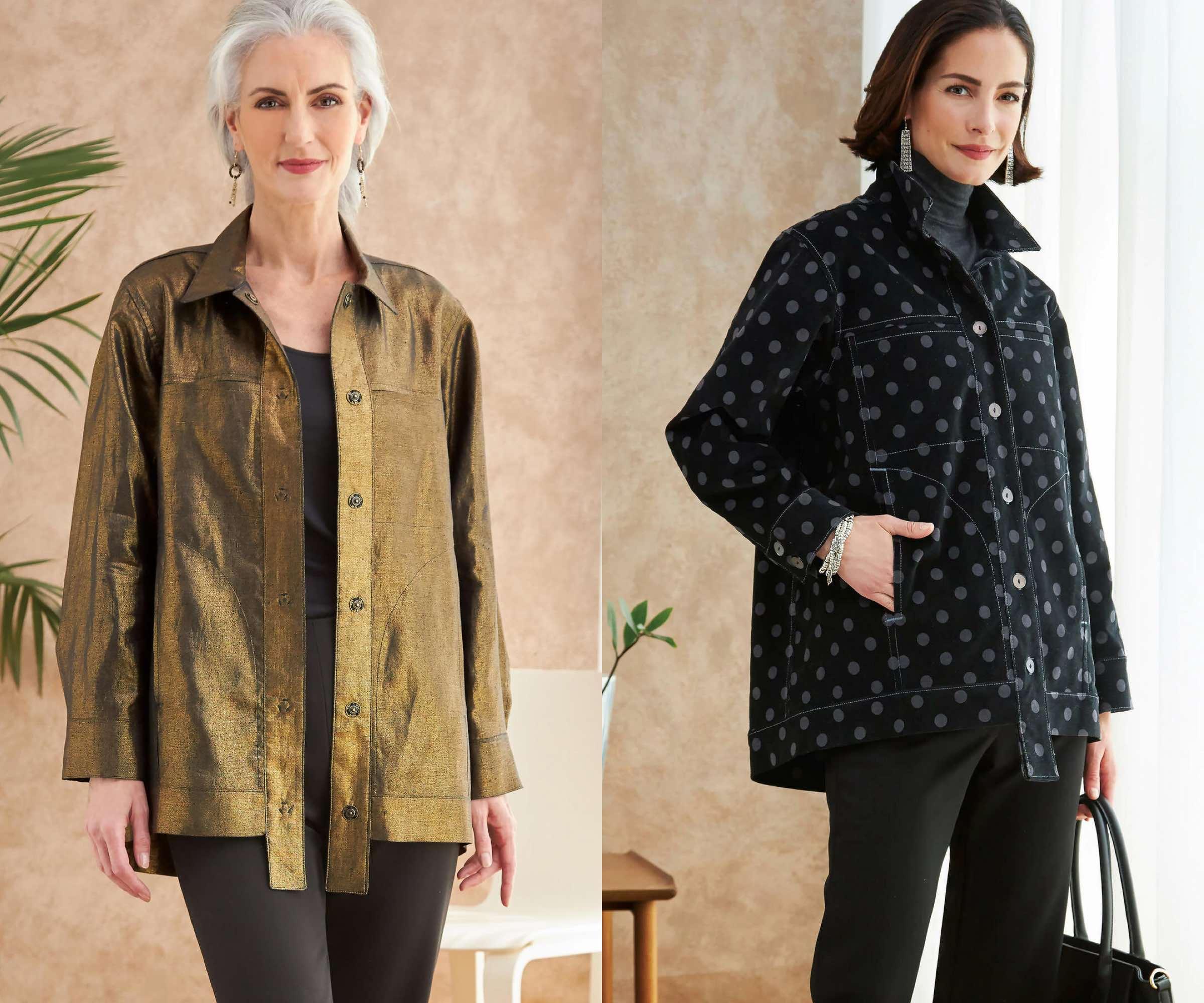

This is an ideal toss-over jacket with flattering lines and cool details. I planned it to be slightly oversized so it would go over other garments, and in a flattering, versatile longer length. Details include two flat in-seam upper pockets, two side pockets, a two-piece sleeve with cuffs and an elongated front band. It will work in many different fabrics including denim, linen, cotton, velveteen, corduroy, canvas and stable knits like ponte. It makes a perfect blank canvas for surface design or collaging different fabrics. Lining is not necessary, though you might want to consider lining the sleeves with a slippery fabric so the jacket will slide on easily. Plus, you could make it in a lighter weight fabric and wear it as a shirt.

Fabric possibilities in woven or knit:
- Denims, linens or cottons in solid, printed, flocked, with holes, metallic embossed, embroidered or painted.
- Ponte double-knit has enough body to hold the jacket shape and can be printed, embossed, embroidered or solid color.
- Casual classics like corduroy or canvas.
- Fancies — brocade, jacquard, velvet, or even organza.
Sewing Tips
Construct the pockets first:
- Mark pocket openings and stitching lines on the top pocket pieces. I made myself a cardboard template to trace with chalk to mark the curved stitching.
- Stay stitch in the seam lines where the notches are marked.
- Clip to the seam line, finish edges and press pocket openings to the inside and stitch in place.
- Baste the top pocket to the inside pocket in the seam lines so they don’t shift.
Design Options:
- Make the jacket as shown.
- Use a contrast fabric on the under/over collar, top/bottom cuff or pocket under layer.
- Use leather for the collar and cuffs.
- Color block the jacket using solid colors or prints.
Closures
- With woven fabrics buttons or snaps can be used.
- With knits, hand stitched snaps are a good option as the knit fabric can shift when putting in buttonholes.
- When making a man’s version switch the buttons/snaps to the other side.


