

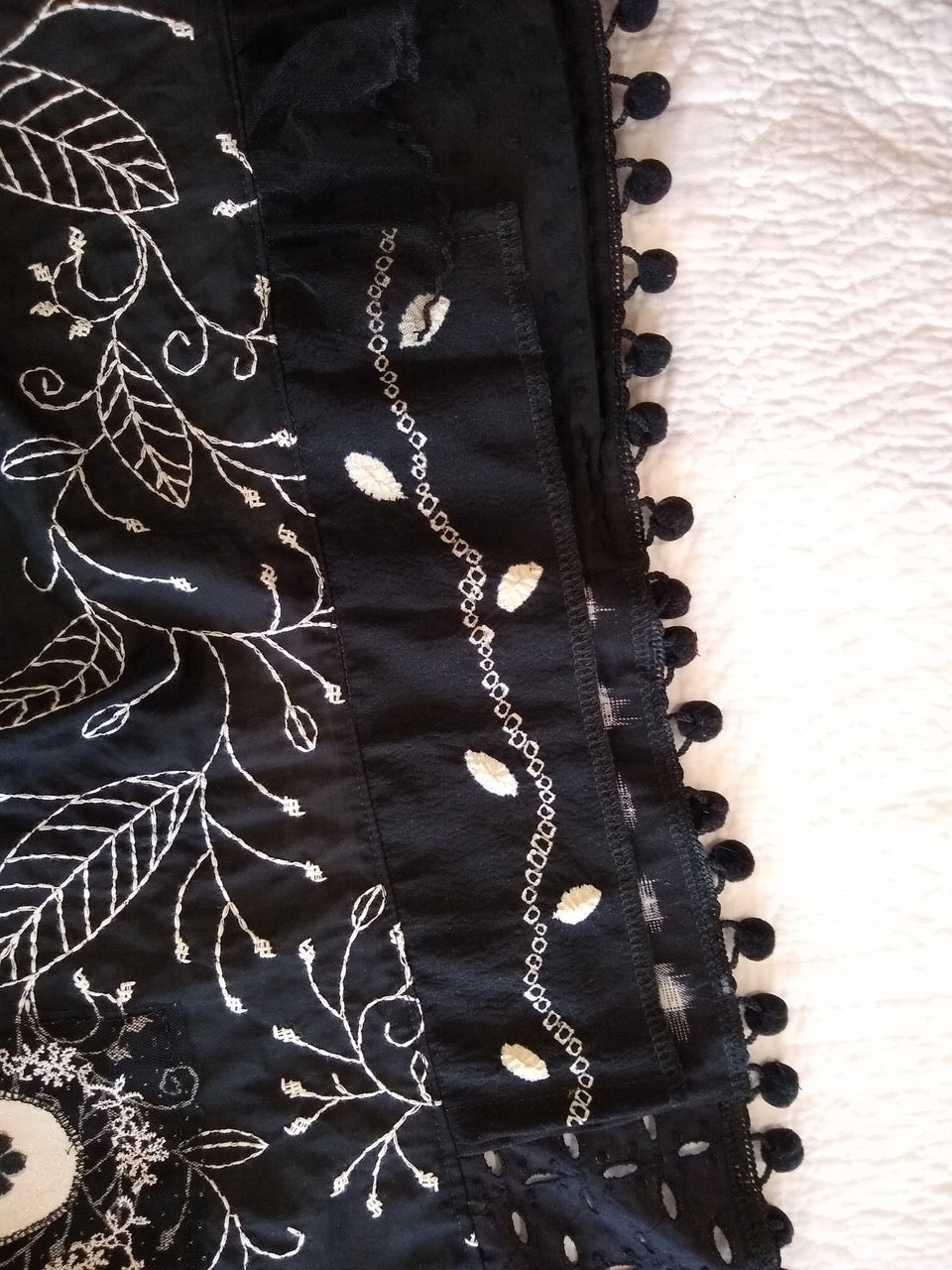


Wearing quilted Kantha fabric is an experience of pure cozy pleasure. While sewing with Kantha is not complicated, it does require thoughtful consideration of pattern placement and seam finishes. Traditionally, Kantha was crafted at home from scraps of old saris, creating household blankets by patching together layers with a simple running stitch. The pieces were laid out on the floor, stitched in manageable lengths for easy handling. Contemporary Kantha, like this version, is commercially produced yet still utilizes leftover fabric scraps. Each piece is meticulously stitched by hand into 8-10 yard lengths, backed by a solid fabric. The edges are neatly finished by tucking under the fabric and sewing with a decorative edge stitch, seamlessly integrating into the garment's design.For our project, we chose the Retazo Jacket from Sew Liberated Patterns, paired with Sita Cotton Kantha. This design is ideal for Kantha, featuring raglan sleeves that provide ease over other garments, a flattering flared shape, and capacious patch pockets constructed with a practical method that eliminates the need for topstitching. Sewing Tips: We used a shirting-weight quilting cotton for the under collar and front facing, along with 2" wide double-folded bias strips for the hem facing. No interfacing is necessary; the layered fabric holds its shape beautifully on its own. For a clean finish, we hand-stitched the hem and facing edges in place. To finish the sleeve edge and allow for cuff rolling, we turned the seams under and hand-stitched them 7 inches from the hem edge, then folded under the raw edge by ¾ inch to the right side and secured it with hand stitches. The bright buttons are vintage shell, found in Paris, stitched in a contrasting burgundy thread. Buttonholes are worked vertically, a design detail that worked best with the width of the facing and the size of the buttons. As a final touch, Katherine is adding French knots along the edge of the collar. Absolutely, we would love to create other versions of this jacket! Marcy says, "I’d make the flat collar wider (by maybe ⅘ - 1”, tapering at center front), for a more dramatic effect. I also really like the vest version, which would work beautifully in Kantha or linen or….and serve as a stylish layering piece under the coat. Just remember to adjust the sizes so the pieces nest together easily. The Retazo also would work well with structured fabrics like denim, linen, and wool coatings, and I could see it in brocade or silk dupioni.” Happy sewing!
Learn moreHi sewing and designing friends! Welcome to our monthly celebration of creativity! Each month, we get to showcase the incredible talent and unique designs of our subscribers. From stunning dresses to cozy sweaters, we’re always amazed by the skill and passion you pour into your handmade garments. I’ll be sharing some of my absolute favorite pieces that have been submitted this month. These creations not only reflect beautiful craftsmanship, but they also embody the spirit of our community. Let’s dive in and get inspired by these fabulous, one-of-a-kind garments!
Learn moreButterick 6520 in a Danish Cotton Fleece knit. When travelling to Minnesota over the holidays, staying warm is key. I wanted a new warm tunic top and needed some color in my wardrobe. A version of B6520 in Copen Blue Cotton Fleece Knit fit the bill. Super cozy and comfy. Easy to cut and easy to sew kept things simple. The fabric was washed on ’normal' and dried in the dryer. It came out looking exactly the same. Cut as shown on the pattern, except for the collar as noted below. The curved seams on the right lower front and back were adjusted to overlap. The seam was pressed up, stitched in place, and trimmed. I decided on no ties. A second pocket was added to the lower left front. On both pockets, I lined up the stitching for a continuous line. The collar was cut narrower than shown and randomly stitched with tucks to narrow it further.
Learn moreYour cart is currently empty.
